

When we talk about how a space sounds, we’re really talking about its acoustic profile—the unique way a room reacts to, enhances, or diminishes sound. Just as a concert hall is carefully engineered to produce warm, natural reverberation that elevates an orchestra’s performance, a typical high school gym produces a completely different experience: harsh reflections, unintelligible speech, and long decay times.
The same logic applies to modern workplaces, classrooms, huddle rooms, and collaboration environments. With the rise of hybrid work and the increasing reliance on conferencing platforms like Microsoft Teams, Zoom, and Webex, room acoustics are no longer optional—they’re operationally-critical.
Most spaces today are designed for aesthetics and functionality, not acoustics. But with the right acoustic strategy, any room can be transformed into a space that supports clarity, comfort, and productivity.
What Are Room Acoustics?
While many people instinctively recognize the difference between a laptop speaker and a cinema sound system, fewer understand the massive role that the room itself plays in the listening experience.
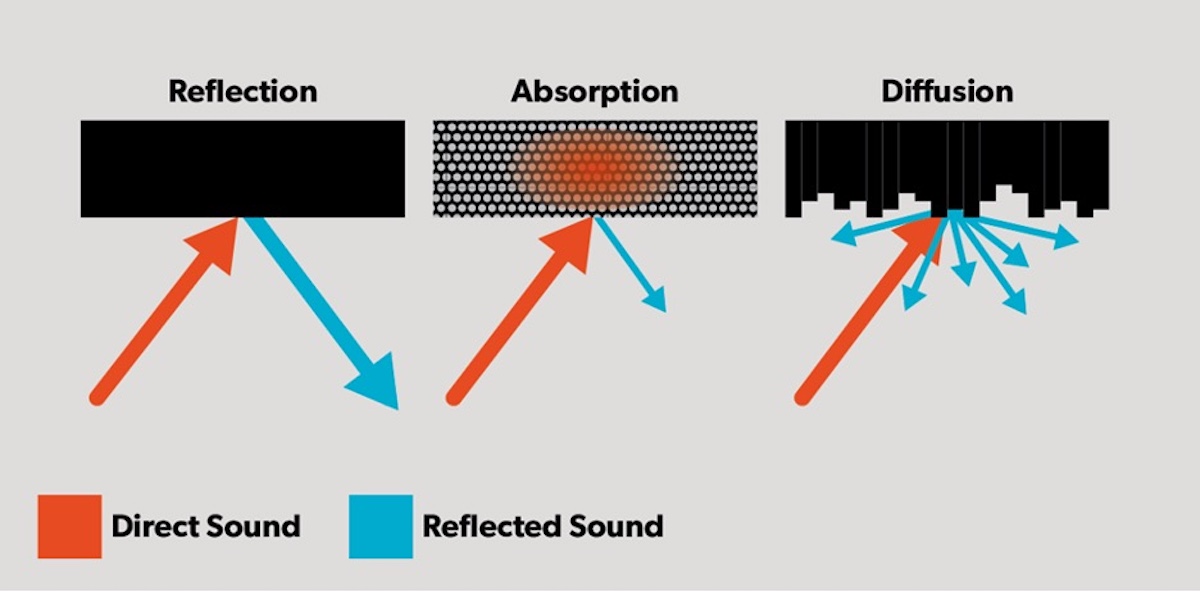
Room acoustics describes how a physical space shapes sound through:
- Reflections
- Absorption
- Diffusion
- Reverberation time (RT60)
- Background noise levels (NC | RC ratings)
- Construction materials and geometry
AV integrators and acoustic consultants use sophisticated modeling software to predict how sound behaves in a room before construction even begins. These tools allow Morefield to optimize rooms for conferencing, learning, presentation, and collaboration from day one.
Even with high-end microphones, beamforming arrays, and DSPs, poor acoustics can defeat the best AV systems. A room’s acoustic profile is the foundation of audio quality.
How to Tell If a Room Has Good Acoustics?
Good acoustics are essential anywhere people communicate—whether in small meetings, hybrid collaboration, large presentations, or training sessions.
Signs your space may have acoustic problems:
- Excessive echo or long reverberation
- Hard, reflective finishes (glass walls, tile floors, metal ceilings)
- Speech that sounds “tinny,” “boomy,” or unclear
- UC platforms struggling with echo cancellation
- Listeners reporting fatigue during meetings
- Side conversations easily heard across the room
- HVAC or hallway noise bleeding into the space
A quick DIY test (to try in your space):
Grab a co-worker and then stand across the room from each other. Try to hold a low-volume conversation across that room. If it feels like every sound is amplified—or is difficult to understand. If you hear reflections “trailing” your speech—your room likely needs acoustic treatment.
Hybrid workflows make this even more critical: if the people on the far end of a MS Teams call can’t clearly hear your presenters, the entire meeting loses efficiency.
Modern Approaches to Improving Room Acoustics
Today’s acoustic design focuses on creating a balanced, neutral, and controlled environment that supports:
- Speech intelligibility for in-room listeners
- Clarity for far-end participants in video calls
- Consistent audio pickup for modern microphones
- Compliance with WELL and industry standards
Here are some examples of how Morefield solves for these acoustic challenges:
Increase Acoustic Absorption
Sound waves interacting with the room either reflect or absorb. Reducing harsh reflections is the fastest way to improve clarity. Modern absorption options include
- Fabric-wrapped acoustic wall panels
- PET felt panels (sustainable and customizable)
- Acoustical ceiling tiles
- Baffles, clouds, and suspended elements
- Upholstered seating and soft furnishings
- Acoustic curtains or drapery
Placement matters as well. Panels should be positioned at:
- First reflection points
- Opposing parallel walls
- Rear walls of meeting rooms
- Ceiling locations where reverberation “pools”
Add Diffusion Where Appropriate
Absorption reduces reflections; diffusion scatters them to create a more natural sound field. Diffusive elements include:
- 3D geometric wall tiles
- Bookshelves
- Wood slat walls with integrated acoustic backing
- Hybrid absorber/diffuser products
Diffusion is especially effective in classrooms, training spaces, large meeting rooms, and blended-use AV environments.
Treat the Ceiling
Ceilings are often the most neglected acoustic surface. Solutions can significantly reduce reverberation and improve microphone performance. Modern solutions include:
- Acoustic cloud panels
- Microperforated wood ceiling tiles
- PET felt cloud arrays
- Acoustic mesh or stretched fabric ceilings
Manage Background Noise
Mechanical noise from HVAC, air diffusers, outside traffic, or adjoining spaces must be controlled. Masking systems can also be used strategically—though for conferencing spaces, masking is typically applied outside the room rather than inside. The compliance standard for room types include:
- NC/RC 25–35 for conference rooms
- NC/RC 30–40 for classrooms
- NC/RC 35–45 for open offices
Design with AV Integration in Mind
Even top-tier products cannot overcome poor acoustics. Acoustic treatment is the bedrock on which AV performance rests. A modern UC room is an ecosystem. Acoustics directly impact:
- Beamforming mic performance
- DSP echo cancellation
- Auto-mixing algorithms
- Camera auto-framing accuracy (audio-triggered)
- Far-end intelligibility
Why Room Acoustics Matter at Work
Better acoustics directly improve:
- Meeting efficiency and participation
- Hybrid meeting equality
- Client communication and engagement
- Employee confidence when presenting
- Listener comfort and reduced fatigue
- Speech privacy and focus
Poor acoustics often lead to:
- Miscommunication
- Staff frustration
- Lower productivity
- AV systems that “sound expensive but perform poorly”
- Frequent complaints about audio quality
A few strategic upgrades—panels, ceiling treatments, layout adjustments, or noise management—can transform the entire communication experience.
Working With a Morefield Room Acoustics Expert
Sometimes simple, DIY fixes aren’t enough, and when it comes to acoustically treating a room, it’s best to call in the experts. Morefield provides consultation and installation of acoustic upgrades, and so much more. Our experienced staff can guide you through every step of the process, and Morefield provides expert installation that will improve your office building acoustics.
Don’t get stuck wondering how to get better sound in your rooms. Contact Morefield for dedicated, experienced help. With over 80 years of serving the Central Pennsylvania business community, our experience speaks for itself. We will give you the best experience, keep your costs manageable and deliver the best outcome.
To find out more about our acoustic room design, or any of our business technology solutions, contact us today.