
Understanding the components of a life safety system
In senior living communities, a life safety system is more than technology—it is a promise. A promise that when a resident needs help, the system will work. Every day. Every time. Everywhere.
Choosing the right life safety system for senior living requires more than comparing features or price. Reliability, location accuracy, and long-term maintainability all depend on how the system is designed and installed. That is especially true for wireless emergency call systems, where RF performance and environmental factors play a critical role.
Emergency call system is purpose-built for assisted living, independent living, and memory care environments. To make an informed buying decision, administrators need to understand how the system works, what components are involved, and what to expect during a professional life safety system installation.
This guide walks through the core system components, senior-living-specific installation best practices, and common challenges every operator should understand before deployment.
The Core Components of a Senior Living Life Safety System
- Transmitters – the devices residents use to call for help
- Repeaters – the infrastructure that ensures those calls are delivered reliably
Each plays a distinct role. Both are critical.
Transmitters: Emergency Pendants and Initiating Devices
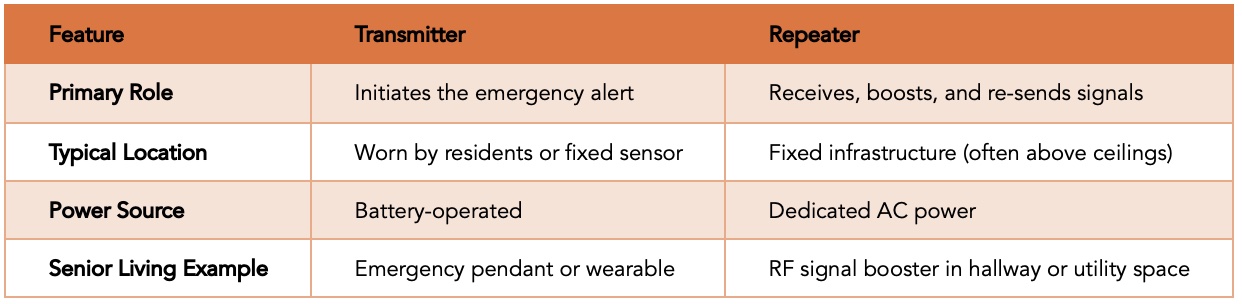
Transmitters are the initiating devices in a senior living emergency call system. These are the tools residents rely on to request assistance during a fall, medical issue, or emergency.
What Transmitters Do
Transmitters detect an event—most commonly a panic button press, pulled cord from a room or fall detection trigger—and wirelessly send a unique digital signal into the system. That signal is then received by nearby repeaters and routed to the gateway and monitoring platform. Because each transmitter has a unique identity, the system knows:
- Which resident initiated the alert
- When the alert occurred
- Where the resident is located (when fingerprinting is properly completed)
Common Senior Living Use Cases
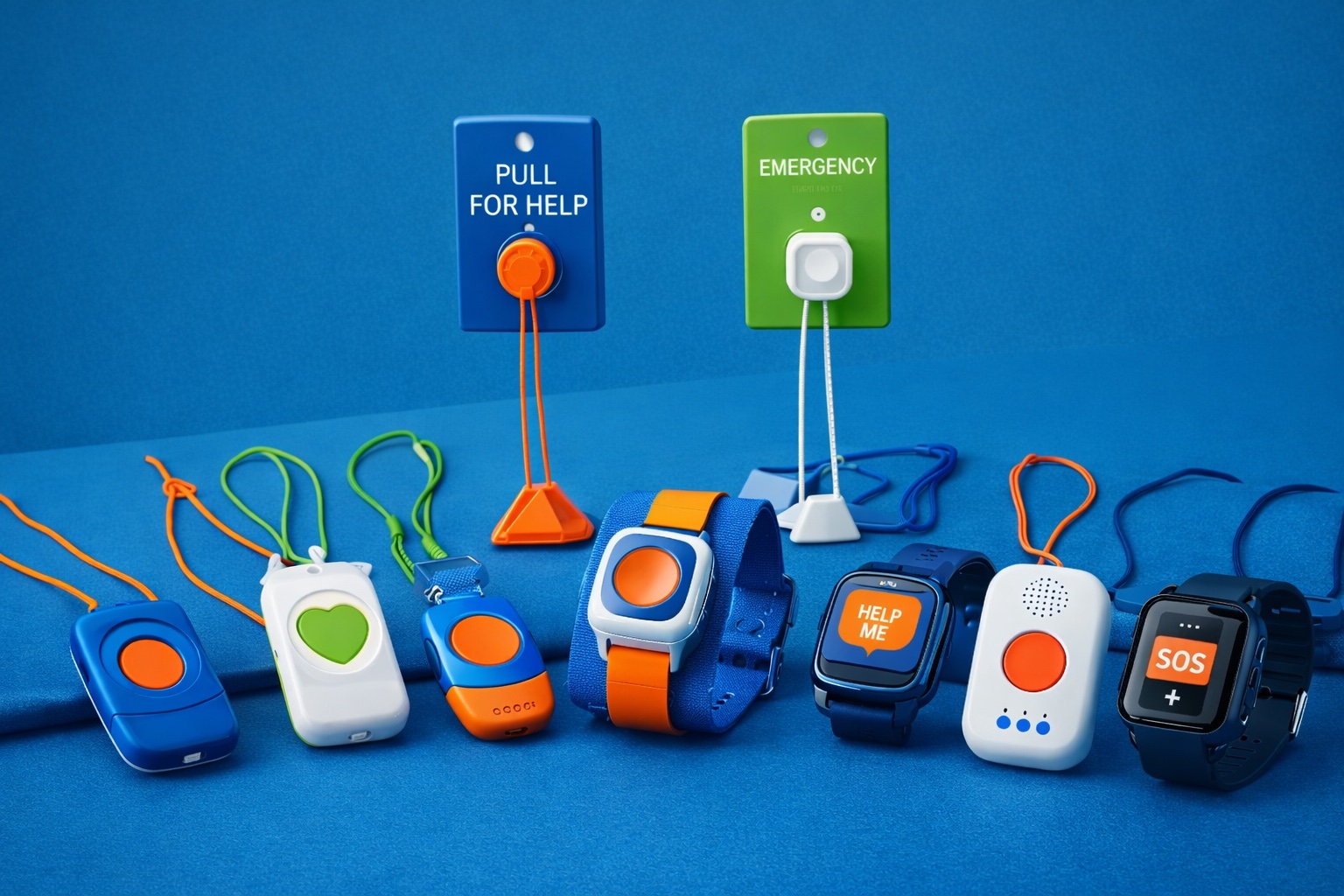
The most common transmitter in senior living is the emergency pendant. These wearable devices are designed to be easy for residents to use, comfortable for all-day wear and reliable in a variety of living spaces.
Depending on the transmitters, different models may support manual panic button activation as well as fall detection. Transmitters are intentionally designed to be.
- Low-power
- Battery-operated
- Mobile and unobtrusive
This makes them ideal for senior living—but it also means performance is directly influenced by battery health, RF coverage, and proper system design.
Repeaters: RF Signals That Power Wireless Life Safety Systems
Repeaters are the fixed infrastructure that makes a wireless life safety system reliable at scale. Residents never interact with them—but without repeaters, the system cannot function.
What Repeaters Do
Repeaters act as intelligent signal relays. They listen for transmissions from pendants and sensors. Receive and validate that data and then boost and re-transmit the signal across the community.
In senior living environments—where buildings often include concrete walls, mechanical spaces, elevators, and long corridors—repeaters are essential to ensure no alert is missed.
Directed Messaging and Supervision
Directed messaging, meaning signals are routed through known, supervised paths—not random broadcasts.
The system regularly checks in with each repeater to confirm it is:
- Powered
- Communicating
- Fully operational
If a repeater goes offline, the system knows immediately. That supervision is critical in a life safety application.
Power Requirements
Repeaters require constant, dedicated AC power—typically via a secure transformer. Because these devices are part of a life safety system, power reliability is non-negotiable and must be treated differently than standard IT equipment.
Installation Best Practices for Senior Living
Installing an emergency call system is not a “plug-and-play” exercise. Best-in-class deployments follow proven standards designed for long-term reliability.
Device Supervision and Check-In Intervals
All devices must be programmed for supervision, allowing the system to detect missing devices, failed hardware, low or dead batteries. The recommended check-in intervals for supervision that balance responsiveness, battery life, and system stability.
- Repeaters: Every 20 minutes
- Transmitters: At least every 60 minutes
- High-risk pendants may use 5-minute intervals
Power, Testing, and Ongoing Maintenance
Senior living administrators should pay close attention to how infrastructure devices are powered and maintained. Begin by securing transformers for the repeaters within the facility. Transformers are secured to outlets with screws, out of reach so that they are protected from accidental unplugging with each location clearly documented. Loose or unplugged transformers are a leading cause of avoidable system downtime.
Avoid GFCI Circuits
Life safety repeaters and gateways should not be powered from GFCI outlets. While appropriate in wet environments, GFCIs can introduce unintended power interruptions that compromise emergency systems.
RF Site Surveys and Routine Testing
Professional installations include RF surveys using an Inovonics survey kit to ensure a minimum 4-decibel signal margin for every device and reliable coverage across resident units and common areas. While the site survey is necessary to aid with the installation. Following that installation, weekly system and device testing is strongly recommended. Regular testing identifies issues early—before they impact resident safety.
Mounting and Environmental Considerations in Senior Living
Wireless life safety systems are sensitive to their surroundings. When possible known RF obstructions should be avoided. Large metal objects—ductwork, steel studs, wire mesh—can block or distort RF signals. Repeater placement must account for these obstacles.
Maintain proper separation of the repeaters within the facility. Devices should be installed at least two feet away from other electrical equipment to reduce interference. The height of the repeater installation can improve reliability. Mounting repeaters as high as possible improves line-of-sight and reduces signal absorption from furniture, residents, and daily activity.
Why Professional Installation and Documentation Matter
Repeaters are typically installed above drop ceilings in senior living communities. This keeps them out of sight where they are physically secure and protected from tampering. However, while this approach has its benefits, hidden infrastructure must be documented properly.
What Senior Living Administrator Should Expect from an Installer
- Detailed documentation of every repeater location. This is important as you should expect that the Repeater hardware will require replacement
- Physical markers or labeling for future reference. In the event you decide to change vendors or your current vendor is no longer available, the new vendor will want to know where each repeater is installed.
- Updated system diagrams. As a secondary reference to physical markers and in the event an administrator, executive or IT leader leaves the organization.
Without documentation, identifying repeater locations can require a disruptive manual RF survey—something that can be avoided with proper professional services. Manual surveys are labor intensive, expensive and only provide limited value to the operational efficiency of the system.
Fingerprinting: How Emergency Pendant Systems Determine Location Accuracy
Fingerprinting is one of the most important—and least understood—steps in a senior living life safety system installation.
What Is Fingerprinting?
Fingerprinting allows the system to associate a transmitter with a physical location by analyzing signal strength from multiple repeaters.
How Fingerprinting Is Performed
After repeaters are installed:
- An installer uses a survey tool
- Walks each resident unit
- Stops at multiple locations to capture RF data
This process is repeated six, seven, eight, or more times per resident room or apartment to build a reliable data profile. Fingerprinting is both technical and experiential. Done correctly, it enables accurate resident location during an emergency.
Common Challenges in Senior Living Installations
Even well-designed systems must account for real-world variables.
Environmental Changes
Fingerprinting may occur before move-in. Once furniture is added hard surfaces may reflect signals, upholstered items may absorb those signals. Experience and expertise will account for this by building in adequate signal margin.
Battery Variability
New pendants transmit differently than older ones. Supervision and proactive battery replacement are essential to maintain accuracy.
Repeater Maintenance and Replacement
Repeaters will eventually need service. When replacements follow proper process, system fingerprints remain intact. When shortcuts are taken, re-surveying may be required. Process discipline protects system integrity.
Safety Depends on More Than Hardware
A senior living life safety system is only as strong as its design, installation, and ongoing support.
- Faster response
- Accurate location
- Confidence for staff
- Peace of mind for residents and families
That is what a modern senior living life safety system should deliver—every day.