




Zero trust architecture is helping companies combat cyberattacks and data breaches by supercharging security at every point of entry across their information technology (IT) infrastructure, from their network to their devices.
We are breaking down what you need to know about transitioning to zero-trust architecture with easy-to-follow steps.
Zero trust architecture refers to a cybersecurity strategy involving strict user verification. This model effectively prohibits unauthorized access to your business’s systems and applications by requiring validation at every applicable user interaction. Its primary concern is protecting your business’s resources through authentication and authorization.
In 2020, 45% of company cyberattacks were caused by network intrusions, meaning the perpetrators gained unauthorized access to the business’s systems. With the influx of cybersecurity threats, remote workers, cloud processing and digitalization, businesses must take action to protect their sensitive data. Zero trust architecture is key in securing digital tools so your operations can continue without interruption.
When you employ a zero-trust framework, your company can continuously validate which users and devices can access which systems and privileges.
Zero trust architecture plays a valuable role in combating cybercriminals looking to steal and exploit your company’s sensitive data, including:
The benefits of implementing this type of security infrastructure include:
The consequences of a cyberattack can be detrimental to your company’s overall operations, bottom line and reputation. With zero trust security, your company can improve access protection across your entire IT landscape.
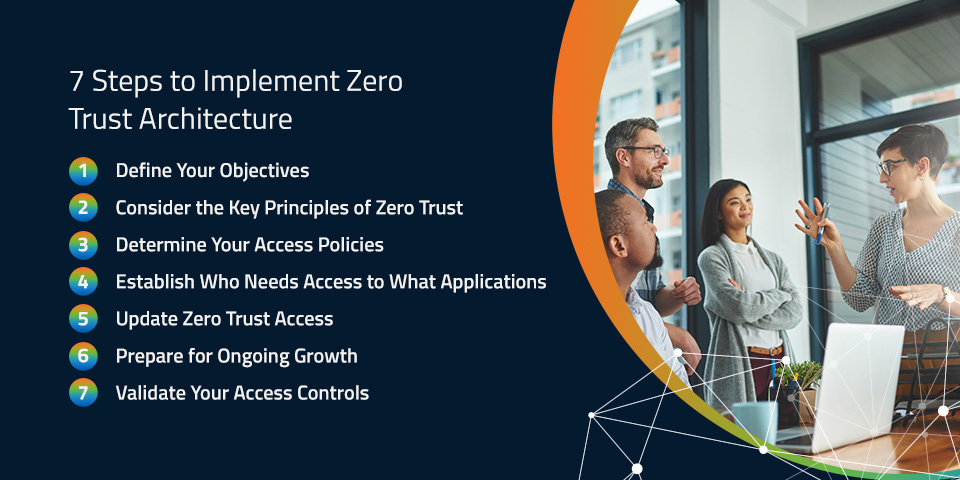
Explore the following steps to implement zero trust architecture and protect your company’s data:
Before transitioning to zero trust architecture, your company must define its security objectives and the goals your company wants to achieve with this infrastructure. Once you have an end goal for how you’ll approach implementation, starting small can be helpful.
Consider rolling out a zero trust framework for a few smaller-scale applications and systems first. For instance, you could begin with your mobile devices or the systems that your remote staffers utilize first, then make a plan to add your company’s more complicated users as you become more familiar with these processes.
When rolling out zero trust architecture, your business should assess how it can manage this high level of security without negatively impacting your team’s productivity with too many access barriers.
Before deciding on which users have access to which applications and which data, you should familiarize yourself with the following principles of zero trust architecture:
With an understanding of the foundational principles of zero trust architecture, your business can focus on the specific access policies it wants to employ. These may include:
The security policies you choose will depend on where this type of infrastructure will benefit your business most.
Next, it can be highly advantageous to create a map of your company’s digital infrastructure to ensure you’ve identified all existing entry points to your critical systems.
In this step, you’ll determine which users have access to which applications and devices and from where. You’ll develop rules and policies so your team has a clear understanding of your security expectations.
Once you map out your digital landscape and determine the access granted to each user across all departments, your business can begin refining the access privileges and restrictions in place to ensure they are up-to-date.
During this step, you’ll comb through each user, ensuring they have access to the necessary systems to perform their jobs. Be sure to also remove access from any former employees.
When transitioning to a zero trust model, your business should prepare to continuously refine its security measures to grow with your operation and protect your sensitive data. Always clearly communicate new policies with your employees so they know what protocols to follow.
If your company has an in-house security team, they should work on establishing a plan to address access to new requests and tools.
Once you’ve implemented your zero trust architecture, your team will need to update your controls and policies regularly. Continuously validate users and confirm they can access the applications, resources and systems they need for success. This will help your business ensure you are adequately protected and your cybersecurity measures are always up-to-date.
Your business should also explore the common challenges associated with zero trust architecture before making the transition. These include:
One of the best ways to deal with these challenges is to work with a cybersecurity professional who understands these intricacies and can help your company create an effective plan to implement zero trust architecture across your IT landscape.
Artificial intelligence (AI) is making waves in the world of cybersecurity. It can effectively supercharge your zero trust architecture by:
When your business needs comprehensive and scalable cybersecurity solutions, turn to Morefield. We have more than 80 years of industry experience and understand the importance of protecting your organization’s technical infrastructure.
We offer many cybersecurity services, ranging from malware protection to mobile device management. Our team is here to help small and medium-sized businesses with the essential network and computer protection required to mitigate threats. Our solutions help ensure only authorized personnel and users have access to your system.
Ready to protect your business with cybersecurity solutions from Morefield? Contact us to get started today!